Why Attend LEAP HR: Higher Education 2026?
Higher education is at a tipping point and HR leaders are right at the center of it.
As institutions grapple with sustained financial pressure, shifting workforce expectations, demographic change, and accelerating technological disruption, the decisions being made now will shape campuses for years to come. LEAP HR: Higher Education exists to support senior HR leaders at this exact moment, when the margin for delay is narrowing and the cost of getting it wrong is rising.
Across two focused days, you’ll step away from day‑to‑day firefighting to engage in honest, senior‑level conversation about what must change next. Expect candid case studies from universities and colleges navigating real trade‑offs, alongside practical workshops and peer discussions on academic workforce design, leadership succession, skills‑based hiring, cost discipline, and responsible AI adoption.
This is not about theory or future promises. It’s about learning how peers are making difficult decisions now, and what they would do differently with the benefit of hindsight.
What to Expect?
Rose‑Hulman...
launched a data‑driven benefits overhaul to exceed a $1M savings target, delivering an estimated $1.5M in cost savings while strengthening recruitment, retention, and morale.
UC Irvine...
redesigned HR delivery using a tiered operating model to eliminate redundancy, centralize transactional work, and unlock $300k+ in projected annual cost savings.
Bethel University...
automated complex faculty and adjunct pay workflows to eliminate manual calculations and project $500k–$600k in annual cost savings through software consolidation and HR automation.
Stevens Institute of Technology...
embedded AI as a core HR team member to unlock up to 90% efficiency gains and free capacity for higher‑value strategic work.
UMBC...
rebuilt its leadership development architecture to target a 20–30% reduction in employee relations cases by equipping leaders to resolve issues earlier and reduce over‑escalation to HR.
Towson University...
combined early‑career workforce development with a tiered referral model to increase applicant pools by up to 15% and convert community outreach into long‑term hires.
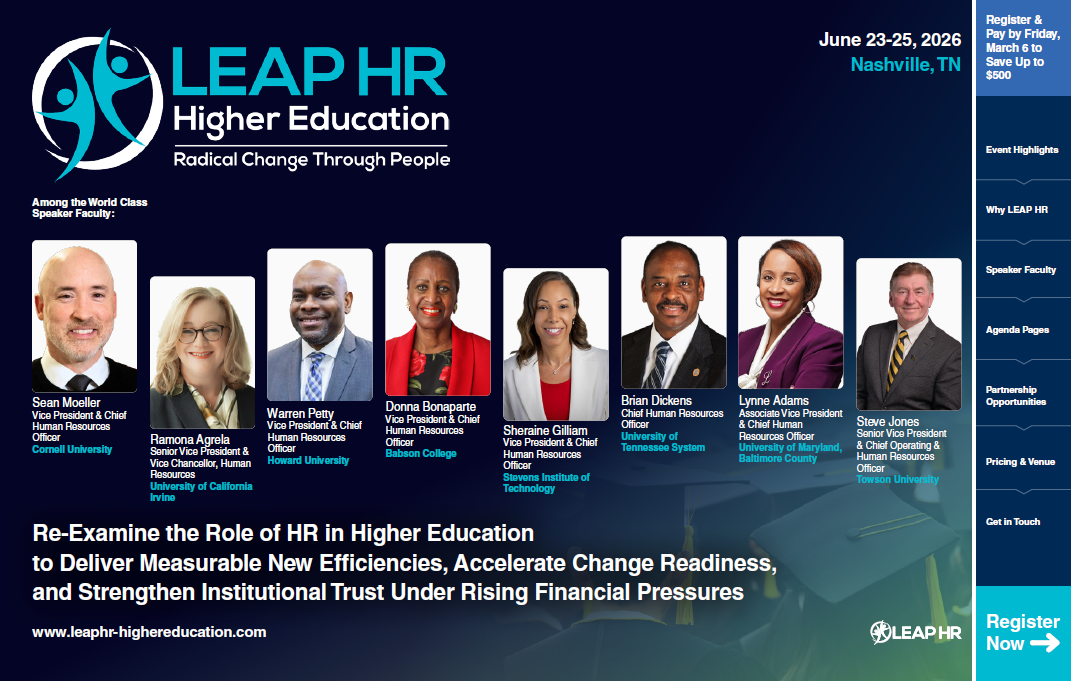
Explore the Full Event Guide
- Get a full overview of the agenda, speakers, and sessions in one place
- Preview featured case studies that we’ll be shining a light on
- Discover exclusive content such as keynote highlights, attendee benefits and more
- Share easily with colleagues and decision-makers to mobilize interest
Attending Companies Include


Explore the Agenda
Dive into the real challenges reshaping higher education HR today. Learn from peer‑led case studies and discussions on academic workforce design, leadership pipelines, skills‑based hiring, and AI’s role in a constrained environment.
Partner With Us
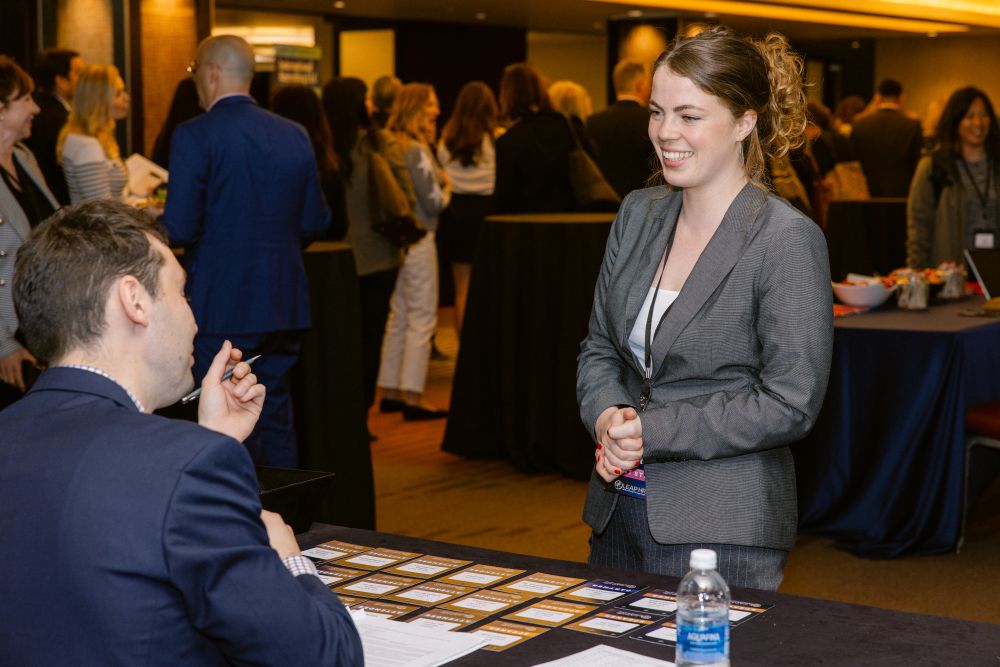
Align your brand with the institutions driving change across higher education. Build meaningful relationships with senior HR leaders solving workforce complexity at scale.
Join Higher Education HR Leaders
Network with senior HR decision‑makers from across the sector. Share ideas, compare approaches, and leave with insight you can take straight back to campus.